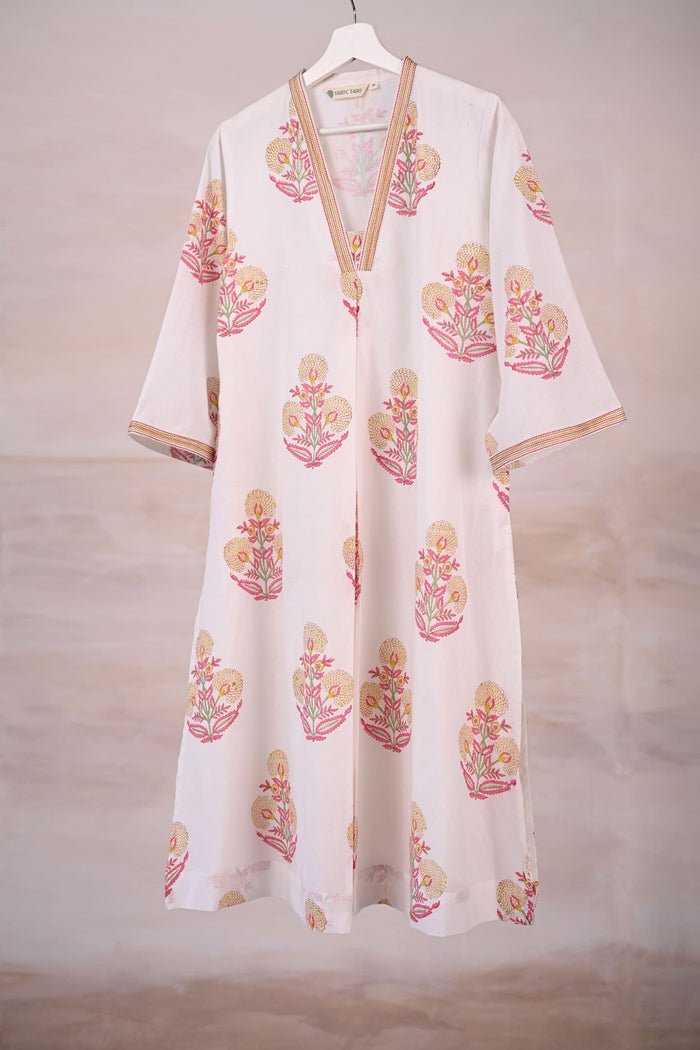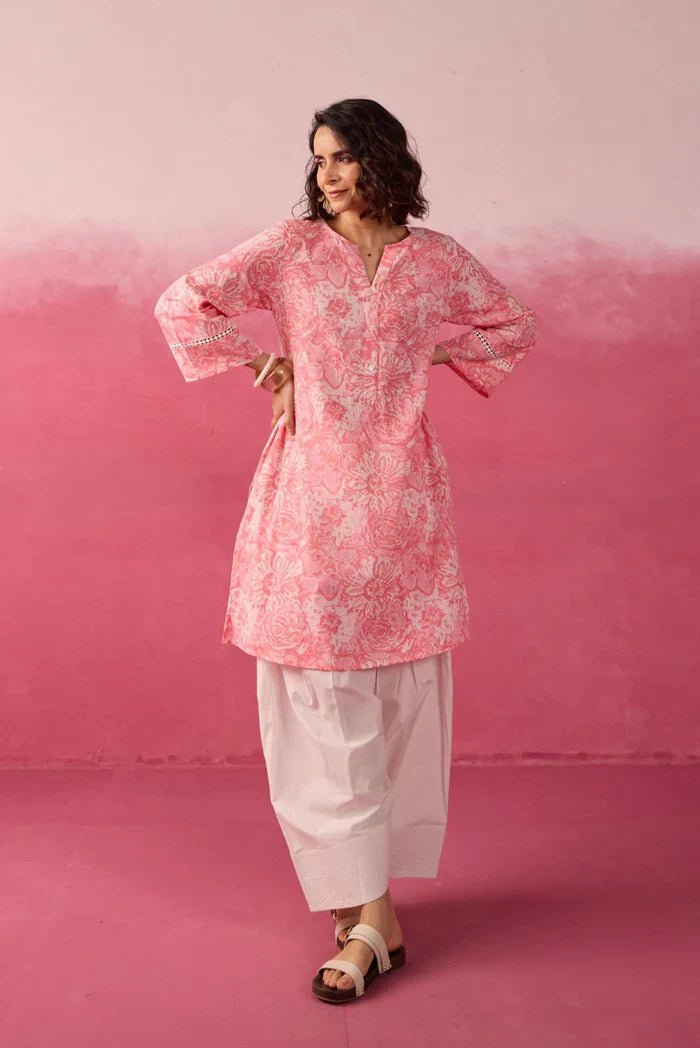

There's a reason a hand block print kurta feels different the moment you put it on. It isn't just the fabric or the fit — it's the knowledge that a real person, working with a hand-carved wooden block, pressed that pattern onto the cloth one stamp at a time. No two pieces come out exactly alike, and that small imperfection is precisely what makes the craft so special. As festive season approaches, more women are choosing artisanal festive kurtas over mass-produced prints, and the story behind this centuries-old craft explains exactly why.
This piece takes a closer look at what goes into a genuinely handcrafted kurta, and why it's worth choosing this festive season.
What Makes Hand Block Printing So Special?
Hand block printing is one of India's oldest textile traditions, and Jaipur remains one of its most celebrated homes. A Jaipur block print kurta typically begins with a design carved by hand into a wooden block — a process that can take days depending on the intricacy of the pattern. Each colour in the design usually needs its own separate block, meaning a single kurta might involve three, four, or even five rounds of careful, precise stamping before the pattern is complete.
Unlike digital or screen printing, which reproduces a design identically across metres of fabric, hand block printing relies entirely on the artisan's hand and eye. Pressure, alignment, and colour depth vary slightly with every stamp, which is what gives each piece its subtle, handmade character.
The People Behind the Print
Craftsmanship ethnic wear isn't just a marketing phrase — it represents generations of artisan families who have passed this skill down through hands-on training rather than formal instruction. Many block printers in and around Jaipur have been practising this craft since childhood, learning directly from parents and grandparents who did the same.
This lineage matters. When you buy a handcrafted piece, you're not just purchasing a garment — you're supporting a community of skilled artisans whose livelihood depends on this craft continuing. It's part of the reason ethnic fashion brands rooted in Jaipur, like Tara C Tara, work closely with local karigars to keep these techniques alive rather than replacing them with faster, cheaper alternatives.
From Fabric to Finished Kurta for Women
Before printing even begins, the fabric itself goes through preparation — usually washing and treating cotton to help it hold dye better. Once ready, the block printing process starts, followed by drying, and in many cases, a final wash to set the colours.
Turning printed fabric into a finished kurta for women involves another layer of craftsmanship entirely — cutting, stitching, and finishing that respects the print rather than working against it. A well-made kurta positions the pattern so it flows naturally across the body, rather than looking randomly placed. This attention to detail is often what separates a truly artisanal piece from a factory-made imitation.
Why Hand Block Print Kurtas Feel Right for Festive Season?
Festive dressing calls for something that feels a little more special than everyday wear, and hand-block prints deliver exactly that. The rich colour palettes — deep indigo, mustard, rust, and floral motifs — sit beautifully alongside festive decor, diyas, and marigold garlands. There's also a quiet elegance to block prints that doesn't rely on heavy embellishment to look festive.
If you're building a festive wardrobe this year, browsing a dedicated hand block printed co-ord set collection is a good place to start. These sets combine the artisanal charm of block printing with the convenience of a ready-matched outfit — ideal for pujas, family gatherings, or evening celebrations.
Handcrafted Co-ord Set vs. Individual Kurtas
Both options have their place in a festive wardrobe, and the right choice often comes down to how you like to style your outfits.
A handcrafted co-ord set offers effortless coordination — the kurta and bottom are designed together, so you don't need to think about pairing. This works well when you want a polished look without spending time styling. On the other hand, individual kurtas from a well-curated kurtas and tunics collection offer more flexibility. You can mix and match with different bottoms, dupattas, or jackets depending on the occasion.
If you prefer solid tones with a printed accent rather than an all-over block print, exploring solid and printed co-ord sets gives you a slightly more subtle festive option that still carries artisanal detailing in smaller doses.
Choosing a Genuine Festive Co-ord Set This Season
With festive shopping picking up pace, it helps to know what separates authentic craftsmanship from imitation prints. A genuine hand block print will show slight variations in colour intensity and pattern alignment — small irregularities that are actually a mark of authenticity, not a flaw. Machine-printed fabric, by contrast, tends to look uniformly perfect, which is often a sign it wasn't made by hand at all.
When shopping for a festive co-ord set, look for brands that are transparent about their process and sourcing. Checking a store's bestsellers collection can also be useful — pieces that remain popular over time are usually the ones that hold their print, colour, and shape well after multiple wears and washes, which is a good practical indicator of genuine craftsmanship.
Final Thoughts: Wearing a Story, Not Just an Outfit
There's something meaningful about wearing a garment that carries the fingerprints — quite literally — of the person who made it. A hand block print kurta isn't just festive clothing; it's a small piece of a much larger craft tradition that continues to thrive because people choose to value it.
This festive season, choosing artisanal, handcrafted pieces isn't just a style decision. It's a way of keeping a centuries-old craft alive, one carefully stamped pattern at a time.