
Dussehra has a rhythm of its own. The morning usually begins with a puja at home, the afternoon fills up with relatives dropping by, and the evening ends in an open ground watching Ravan's effigy go up in flames. That is a lot to cover in one outfit, and it is exactly why so many women are choosing Dussehra co-ord sets over heavy lehengas or sarees that need constant adjusting.
In this guide, we walk you through how to pick the right co-ord set for each part of the day, which colours and fabrics suit the season, and a few simple styling ideas that turn a comfortable outfit into a properly festive one.
Why Co-ord Sets Work So Well for Dussehra?
A co-ord set takes the guesswork out of dressing. The top and bottom are designed together, so the colours, prints and proportions already match. You simply wear it and add your own touches.
On a festival day, this matters more than it seems. You may be sitting on the floor during the puja, helping in the kitchen, bending to touch elders' feet and walking through a crowded mela later. Ethnic co-ord sets, whether a kurta with a farsi salwar, a tunic with palazzos or a short kurta with straight pants, let you move freely while still looking traditional. They also photograph neatly, which counts on a day when everyone wants a family picture.
If you are building a festive wardrobe, browse our full range of ethnic co-ord sets to see how the different silhouettes compare.
Choosing Your Dussehra Co-ord Set by Occasion
Morning Puja at Home
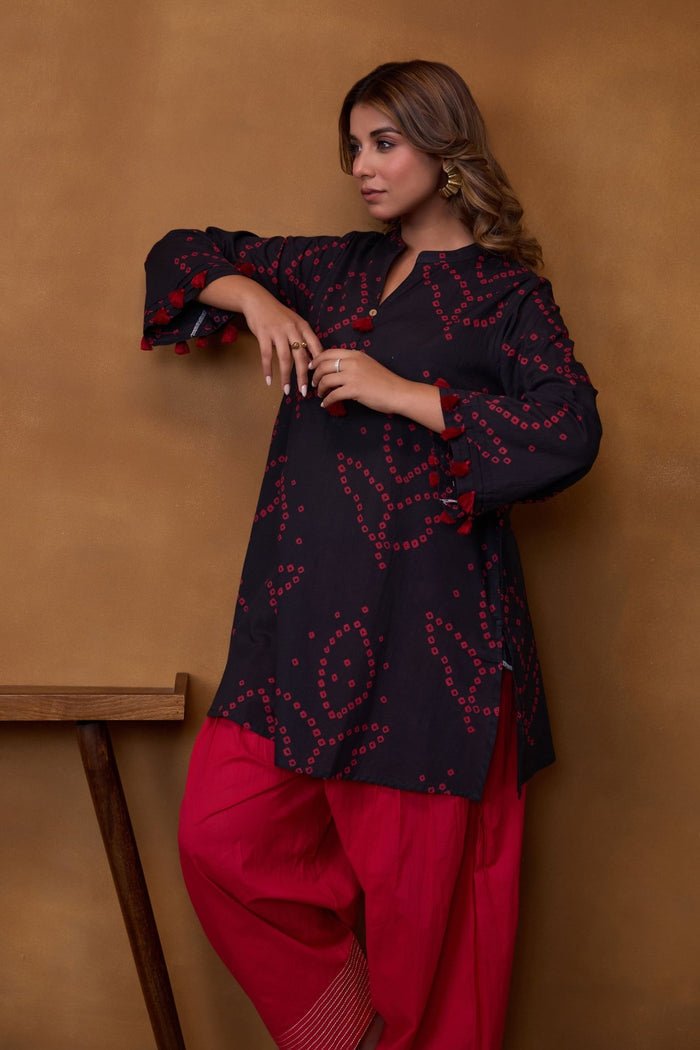
For the morning puja, comfort and modesty come first. Look for a relaxed kurta with 3/4 sleeves and a flowing bottom such as a farsi salwar or wide palazzo, so sitting cross-legged through the aarti feels easy. Soft cotton is ideal here. A Bandhani printed kurta paired with a contrasting farsi salwar is a good example of puja wear for women that feels traditional without being heavy. The tie-dye pattern has deep festive roots in Rajasthan and Gujarat, and the outfit stays breathable through a long ritual.
Visiting Relatives and Family Lunches
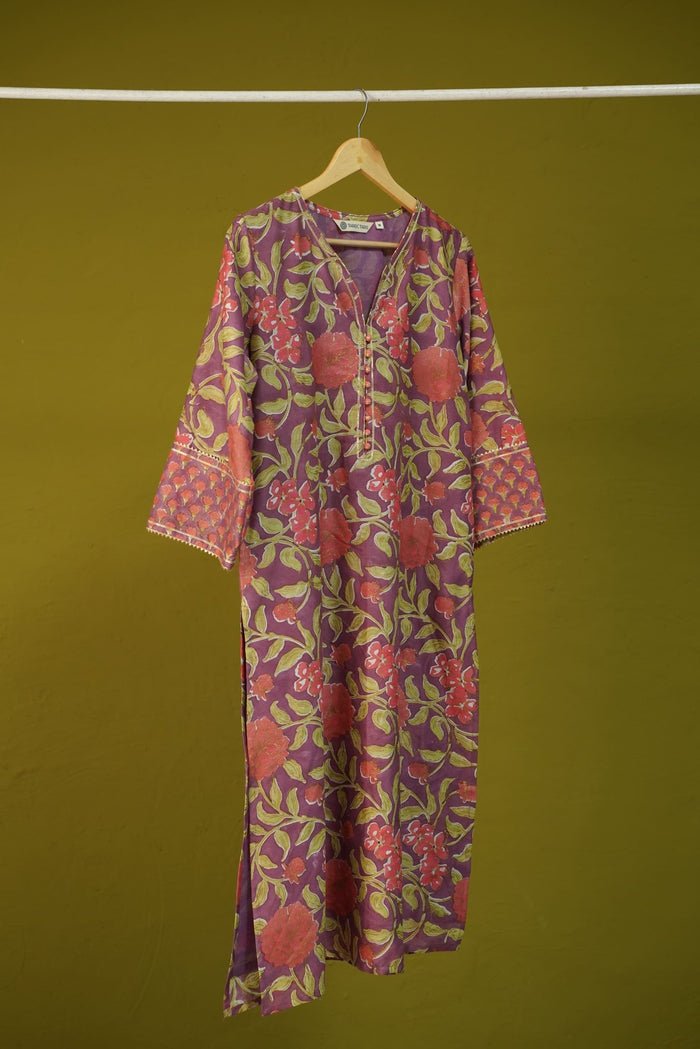
The middle of the day is usually spent hosting or visiting family, and this is where a slightly dressier piece helps. Hand block printed sets, with their fine motifs and hand-applied colours, look considered without trying too hard. The elders in the family will notice the craftsmanship, and you will appreciate that the cotton does not cling in the afternoon heat. Our hand block printed co-ord sets are made in Jaipur, and each piece carries small variations that show it was printed by hand.
Evening Ravan Dahan and Community Melas
Evenings call for a little more shine. Ravan Dahan grounds are crowded and often dusty, so avoid trailing hems and delicate fabrics that snag easily. A co-ord set with gota piping or subtle embroidery gives you sparkle under the lights, while a mid-length kurta keeps things practical. Carry a light stole as well, since October evenings in north India can turn cool after sunset.
Colours That Feel Right for Dussehra
There is no single colour you must wear on Dussehra, but some shades have long been part of festive dressing in Indian homes:
• Red and maroon: classic festival colours, associated with strength and celebration.
• Yellow and marigold orange: bright and cheerful, and a natural match for the marigold garlands that decorate homes and temples.
• Pink and fuchsia: festive but softer, and lovely for daytime events.
• Green: fresh and balanced, often chosen for new beginnings.
If you prefer muted tones, choose an ivory or pastel base and let a coloured dupatta, a contrasting bottom or bright jewellery bring in the festive feel. Many Dussehra outfits for women now pair two contrasting colours, such as a pink kurta with a green salwar, which looks lively in photos without feeling loud.
Fabrics to Pick for October Weather
October weather across India can be unpredictable. Afternoons are often still warm, while evenings become pleasantly cool. Keep these options in mind:
• Cotton and cotton cambric: best for day-long wear and home pujas. Breathable, easy to wash and comfortable when you are on your feet for hours.
• Chanderi silk: lightweight with a gentle sheen, ideal when you want something dressier without the weight of pure silk. Our Chanderi silk kurtas in maroon, teal and fuchsia work beautifully for evening gatherings, paired with matching bottoms or your own palazzos.
• Cotton slub and textured cotton: these add interest to solid-colour sets and hold their shape well through a long day.
How to Style Festive Co-ord Sets?
Add a Dupatta for the Puja
A co-ord set does not strictly need a dupatta, but carrying one is a thoughtful touch, especially at a temple or an elder's home. Pick a Bandhani, Leheriya or plain mulmul dupatta that repeats one colour from your print.
Keep Jewellery Balanced
If your set is heavily printed, keep jewellery simple with a pair of jhumkas and a few bangles. Solid or pastel festive co-ord sets give you room to go bolder with a statement necklace or a kundan choker.
Choose Practical Footwear
Kolhapuris, embroidered juttis or low block heels work best. You will be removing your footwear for the puja and walking on uneven ground in the evening, so skip anything stiff or very high.
A Quick Note on Fit and Sizing
Festive outfits should never feel restrictive. Check the size chart before ordering, and look closely at the top and bottom lengths, because the same kurta sits very differently on someone who is 5'2" compared to someone who is 5'7". Many of our sets are available from XS to 6XL, so every woman in the family can find a comfortable fit. If you are shopping close to the festival, order early so there is time for an exchange if you need one.
Frequently Asked Questions
What should women wear for Dussehra puja?
Choose a comfortable ethnic outfit with 3/4 or full sleeves and a relaxed bottom, such as a kurta with a farsi salwar or palazzos. Cotton and cotton blends work best for long rituals.
Are co-ord sets suitable for festive occasions?
Yes. Co-ord sets in block prints, Bandhani, Chanderi or with gota detailing look festive enough for pujas and family gatherings, and they are far easier to wear than heavier traditional outfits.
Which colours are good for Dussehra?
Red, maroon, yellow, orange, pink and green are popular festive choices. Pastel sets can be made festive with a bright dupatta or statement jewellery.
Final Thoughts
The best Dussehra outfit is the one that lets you enjoy the day, whether you are sitting through the puja, catching up with cousins or cheering as the effigies burn, without once thinking about your clothes. Pick a co-ord set that suits your schedule, choose a colour that makes you happy and add one or two personal touches. That is all it takes to look festive, feel comfortable and celebrate the victory of good over evil in your own style.